

 Donate
Program Highlights from Franklin University
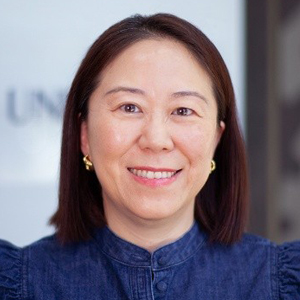
Baccalaureate Registered Program Director at Franklin University
Franklin University’s Bachelor of Science in Financial Planning offers students a fully online path toward meeting the education requirement for CFP® certification. Founded in 1902 in Columbus, Ohio, the private university serves mostly adult learners — average age 34 — with 80% residing in Ohio and the rest across the U.S. and abroad.
Students in the program are often career changers returning to school after successful careers. “They’re very determined,” says Program Director Martina Peng, Ph.D., CFP®, NSSA®. “They’ve worked for a while and either want a career change or are already in the financial services industry pursuing CFP® [certification].” Many self-fund their education, which keeps motivation high.
Since launching the financial planning major in 2009, Peng has developed creative ways to engage an entirely online student body. Her strategies combine innovative course design, community-based projects, and opportunities for real-world experience through conferences and partnerships. Graduates go on to work in financial planning firms, banks and large brokerage companies.
Innovative Course Design and Delivery
Courses in the program take place in live virtual sessions and are designed to give students many opportunities to engage with their professors and peers. Through various platforms, students can chat with each other and communicate via message boards. Professors also host online office hours and give students a great deal of attention.
One thing that sets the program apart is that courses are taught by adjunct faculty members with years of real-world financial planning experience and CFP® certification (apart from the insurance instructor, who holds separate designations). Even Peng, who holds a Ph.D. in Financial Planning, sat for the CFP® exam while developing the bachelor’s program to better understand what the exam would be like for her students. “We really want our students to learn from someone who’s been working in the profession” says Peng. She created all the centralized curriculum for the program in conjunction with a team of instruction designers and content editors. She also teaches several of the courses herself.
Engaging Online Students Through Community Projects
In 2020, Franklin launched the Pro Bono Financial Planning Community Project, which pairs students with professional planners to serve real clients online. This is a collaborative effort between faculty from Franklin University, The Ohio State University and Columbus State Community College. Each virtual session includes a student, a financial planner — who is often based in central Ohio — and a client, who may be anywhere in the country.
Students conduct the client intake, observe the planning process and afterward debrief with the advisor before summarizing recommendations for the client. This experiential learning fosters both technical and interpersonal growth and often leads to internships or job offers.
Supported by the Foundation for Financial Planning, Peng co-authored a guide with colleagues from The Ohio State University and Columbus State Community College to help other colleges and universities start similar pro bono projects.
Students also gain hands-on experience through the IRS Volunteer Income Tax Assistance (VITA) program, which provides free tax preparation to low- and moderate-income individuals. Franklin partners with United Way of Central Ohio and the Legal Aid Society of Columbus to support underserved families.
Clients upload their tax documents to the IRS-designated portal online. Once the returns are completed by students, faculty meet with students via video calls to review returns and correct errors — where, Peng explains, “the experiential learning happens.” Over 13 years, students have prepared more than 2,500 tax returns, generating $2.6 million in refunds for local families.
The Challenge: Teaching Soft Skills
Peng’s biggest challenge is teaching the soft skills financial planners need. “We work closely with clients, so how do you talk so they trust you? How do you ask the right questions? How do you teach motivation and curiosity?”
She believes soft skills are just as vital — and harder to teach — than technical skills. Projects like VITA and the pro bono initiative help students practice empathy, communication and professionalism in real-world contexts, bridging the gap between academic learning and client-centered practice.