Donate
Financial Fraud Social Media Kit
About
This toolkit includes suggested LinkedIn posts and graphics to help amplify CFP Board’s new financial fraud research report, “Don’t Fall for It: Guarding Against Financial Fraud.” Copy and paste any post below and pair it with one of the attached graphics.
Tagging
Tag CFP Board by typing “@CFP Board” and selecting our organization from the dropdown.
Suggested Hashtags
Use two to four per post.
- #CFPpro
- #FinancialFraud
- #ScamAwareness
- #ConsumerProtection
- #FinancialLiteracy
- #FinancialPlanning
Suggested Posts
Option 1 — Awareness Gap
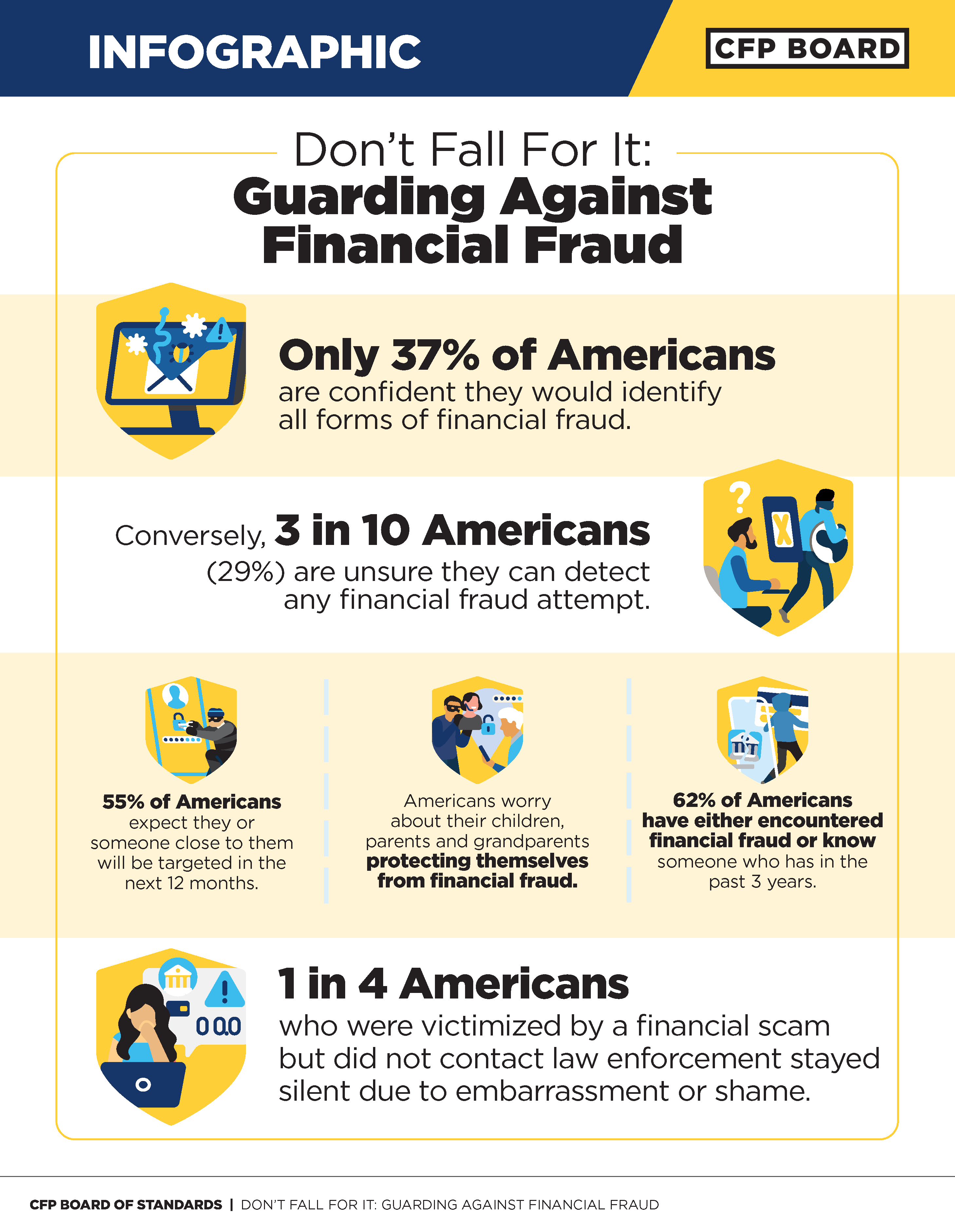
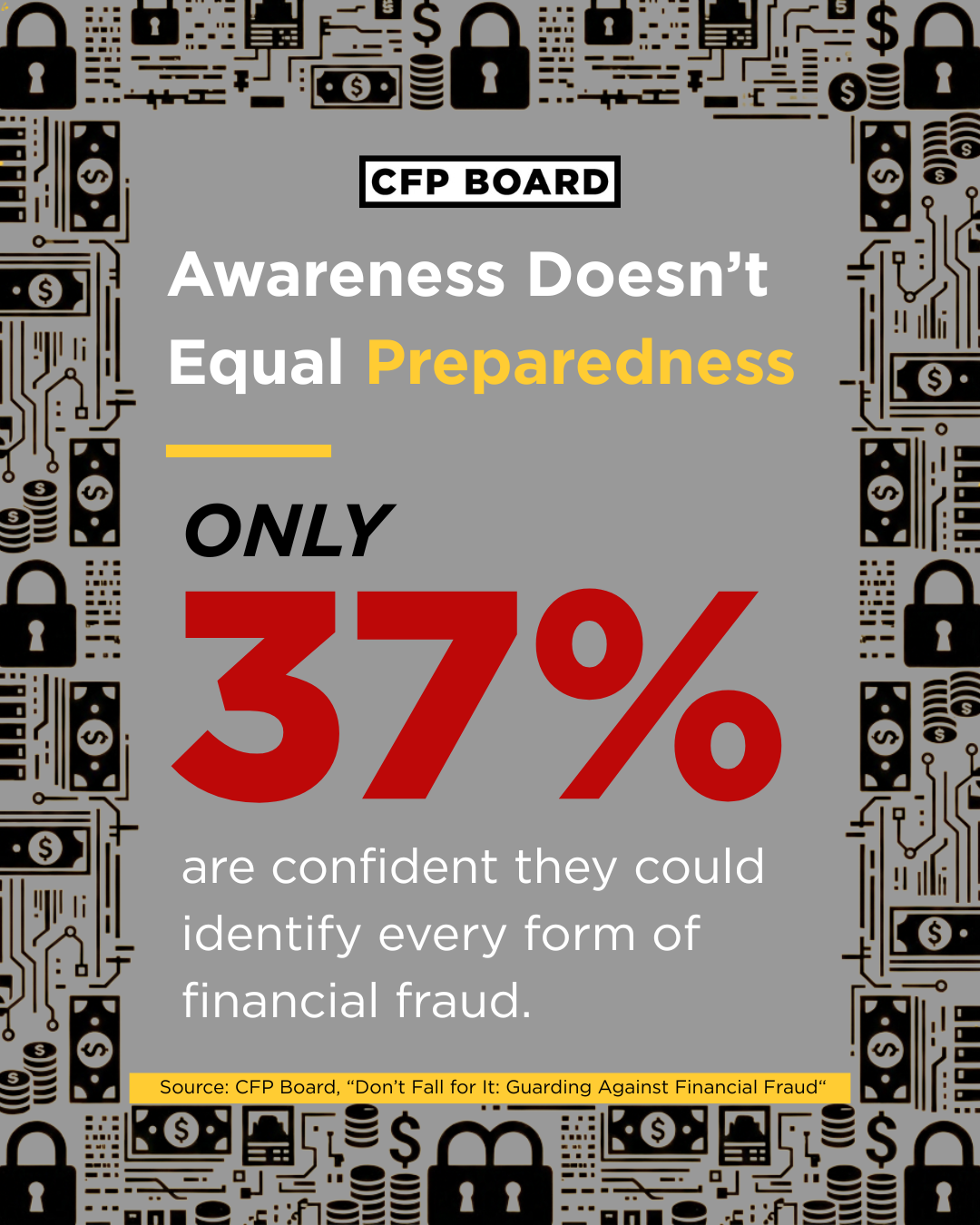
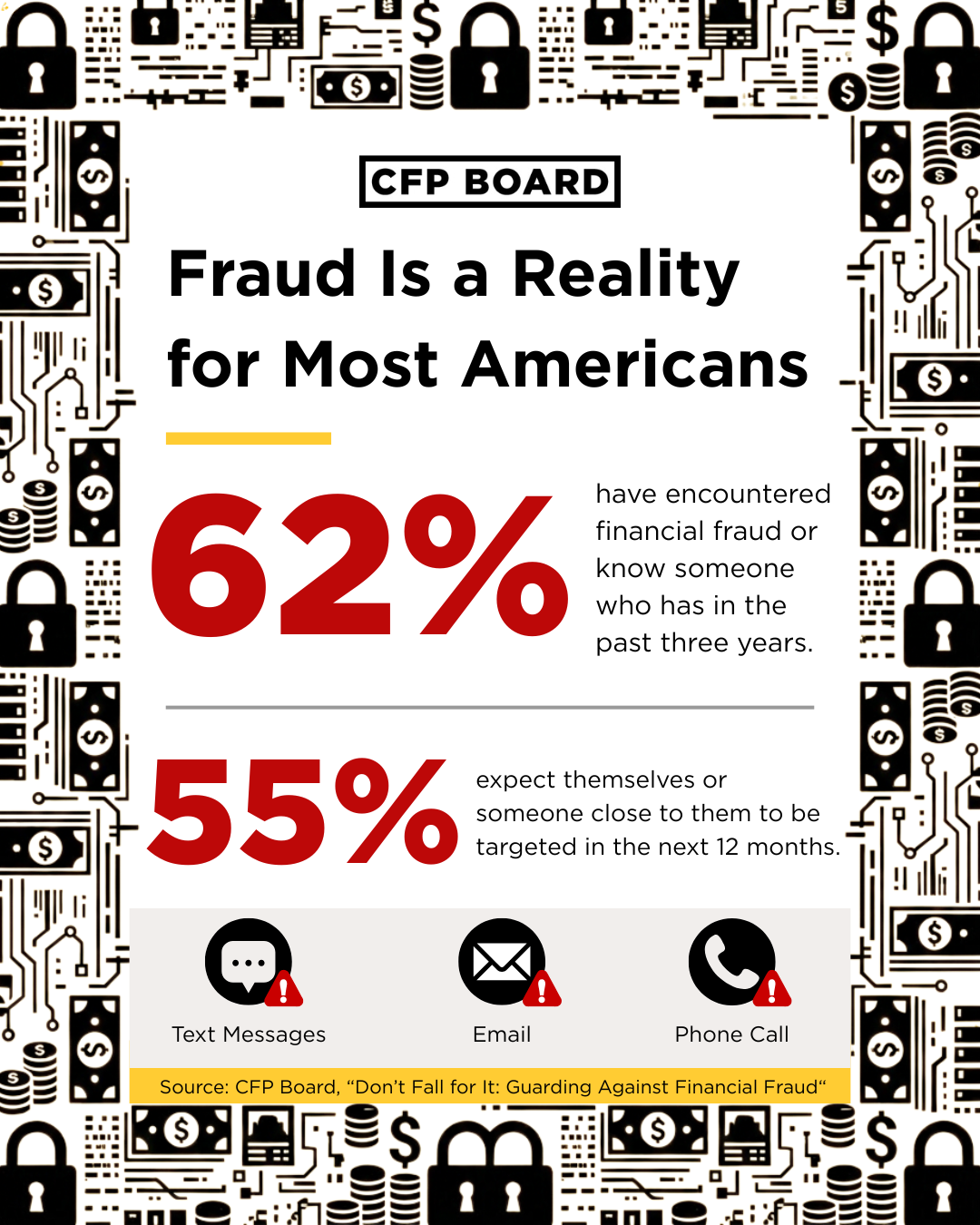
Financial fraud is no longer a rare event. It is becoming part of everyday life. New CFP Board research found that 62% of Americans have encountered financial fraud or know someone who has in the past three years, yet only 37% are confident they could identify every form fraud takes. Closing the gap between awareness and preparedness is critical to protecting long-term financial security. Read CFP Board’s “Don’t Fall for It: Guarding Against Financial Fraud” report to learn more: https://www.cfp.net/industry-insights/reports-and-statistics/consumer-surveys/guarding-against-financial-fraud
Option 2 — Evolving Scams
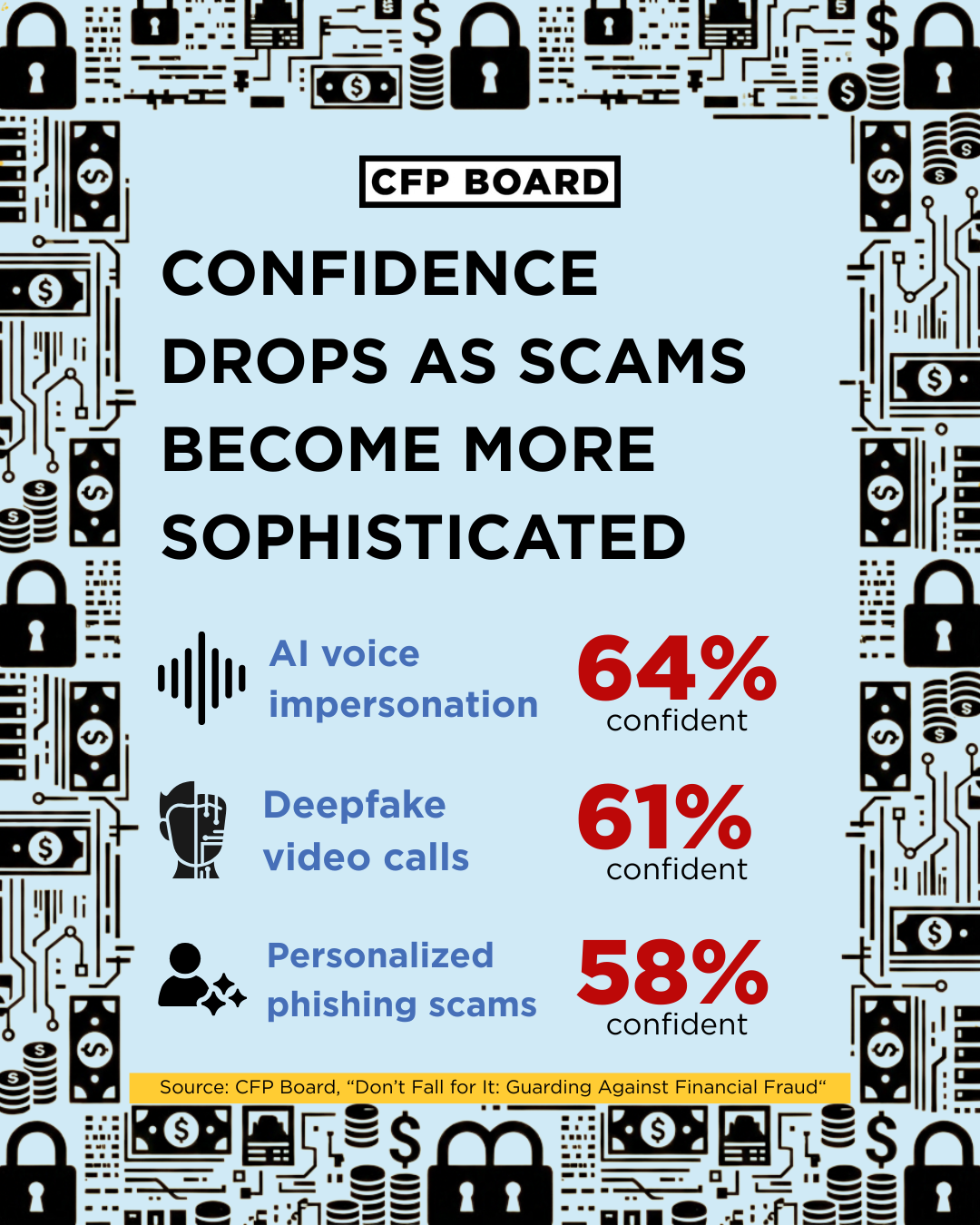
Think you could spot a scam? CFP Board research suggests many Americans may be more vulnerable than they realize. While most people feel confident identifying traditional phishing attempts, confidence drops when scams involve AI voice impersonation, deepfakes and highly personalized messages. Fraud is evolving quickly, and preparation matters. Explore the findings in CFP Board’s latest research report: https://www.cfp.net/industry-insights/reports-and-statistics/consumer-surveys/guarding-against-financial-fraud
Option 3 — Family Conversations
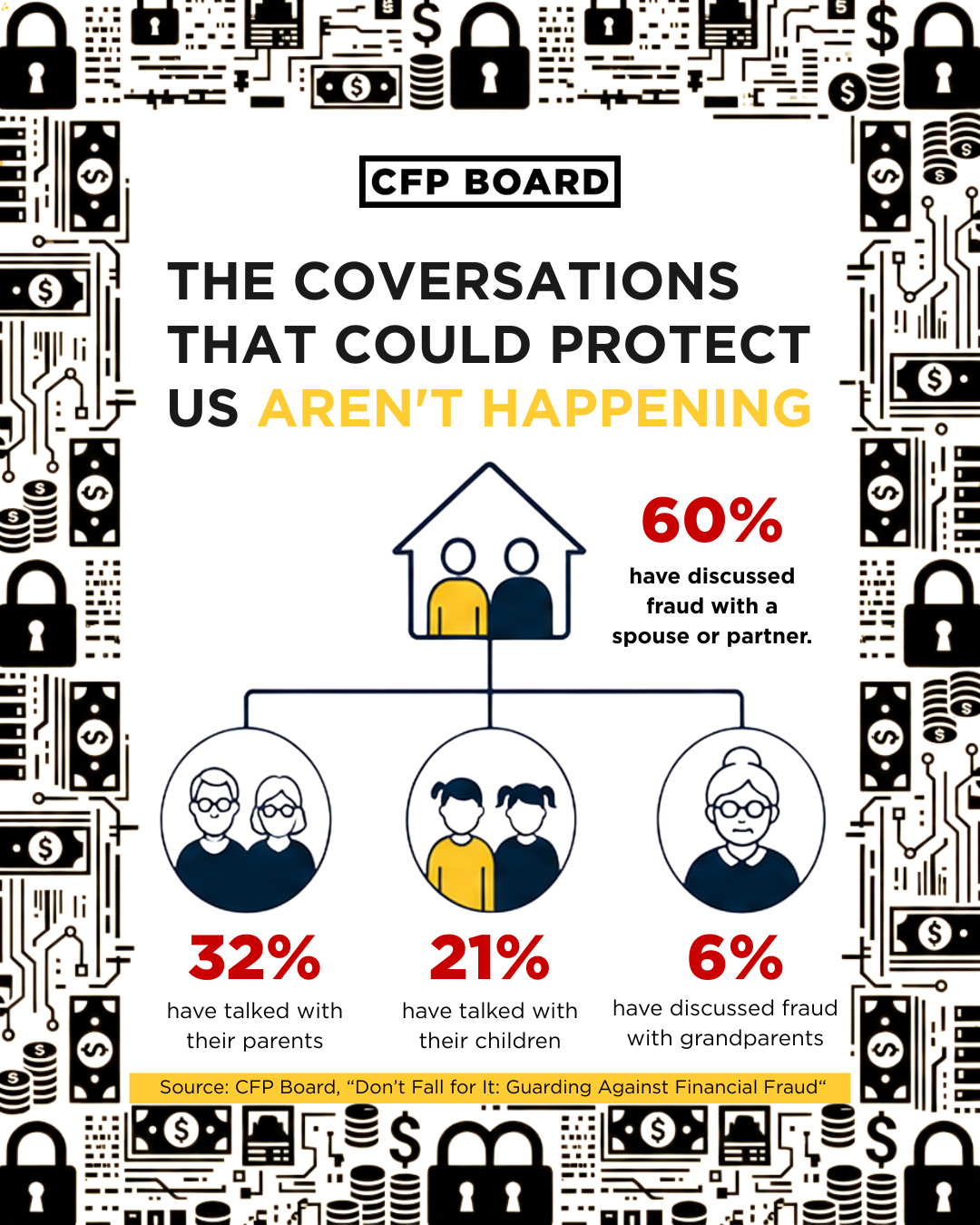
The most powerful fraud prevention tool may be a conversation. CFP Board research found that while many Americans discuss financial fraud with a spouse or partner, far fewer are having those conversations with parents, grandparents or children. As scams grow more sophisticated, talking openly about fraud risks can help families better protect one another. Read the full “Don’t Fall for It: Guarding Against Financial Fraud” report: https://www.cfp.net/industry-insights/reports-and-statistics/consumer-surveys/guarding-against-financial-fraud
Option 4 — Victims Suffer in Silence
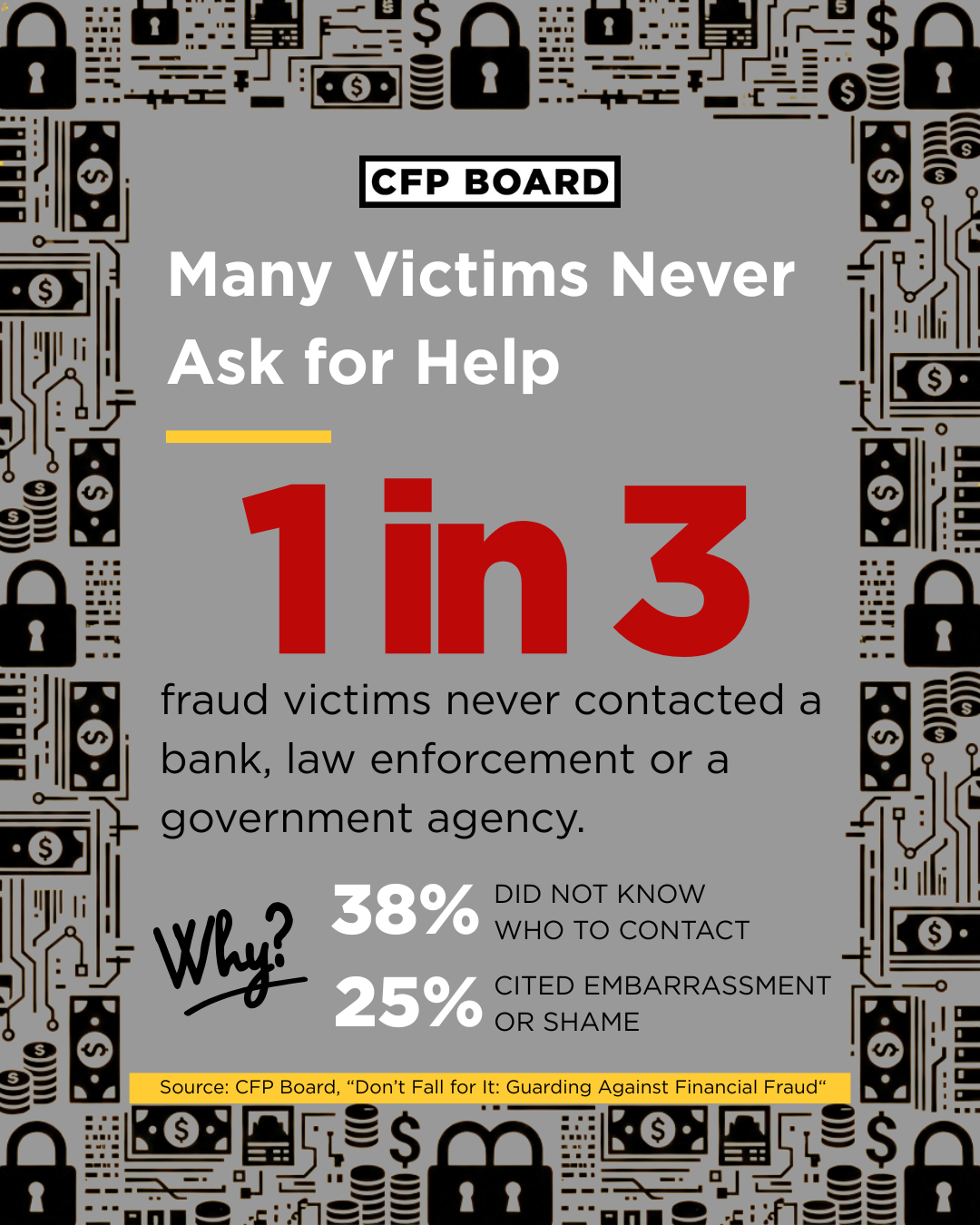
Financial fraud can happen to anyone, yet too many victims suffer in silence. CFP Board research found that one in three fraud victims never reported the incident, often because they did not know where to turn or felt embarrassed. No one should face fraud alone. Trusted guidance and a clear response plan can make all the difference. Learn more in CFP Board’s latest research: https://www.cfp.net/industry-insights/reports-and-statistics/consumer-surveys/guarding-against-financial-fraud
Option 5 — Younger Americans
Many Americans believe they can spot financial fraud. CFP Board research tells a more complicated story. Younger Americans report greater confidence in detecting digital scams, yet they lose money to fraud at higher rates than older generations. Confidence is important, but preparation is essential. Download CFP Board’s “Don’t Fall for It: Guarding Against Financial Fraud” report to learn how Americans can better protect themselves and their families: https://www.cfp.net/industry-insights/reports-and-statistics/consumer-surveys/guarding-against-financial-fraud
Graphics
Click an image below to view full size and save to your device.
Awareness Doesn’t Equal Preparedness (37%)
Fraud Is a Reality for Most Americans
Confidence Drops as Scams Become More Sophisticated
The Conversations the Could Protect Us Aren’t Happening
Many Victims Never Ask for Help
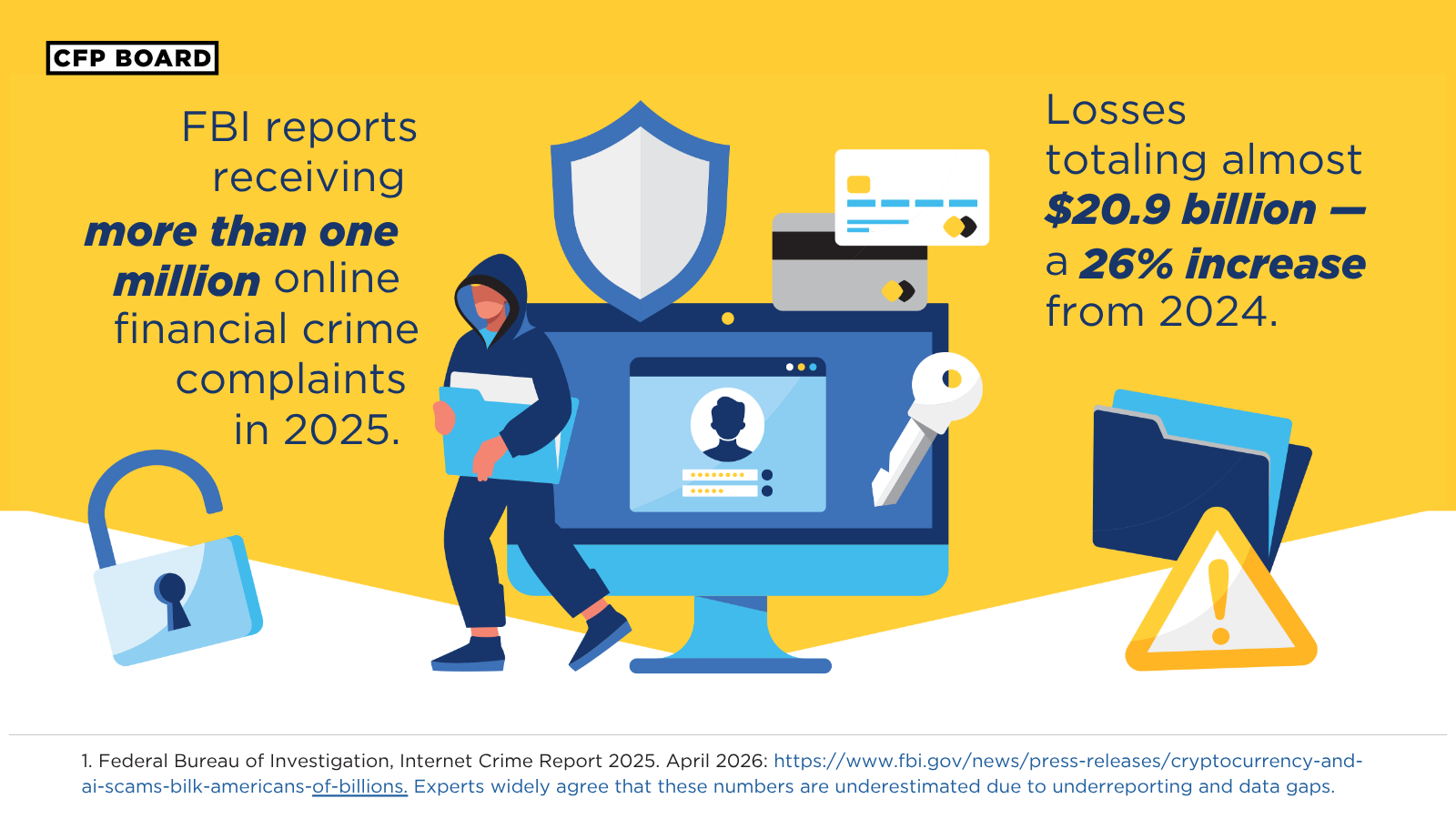
FBI Financial Crime Statistics
Infographic from Don't Fall for It: Guarding Against Financial Fraud report